


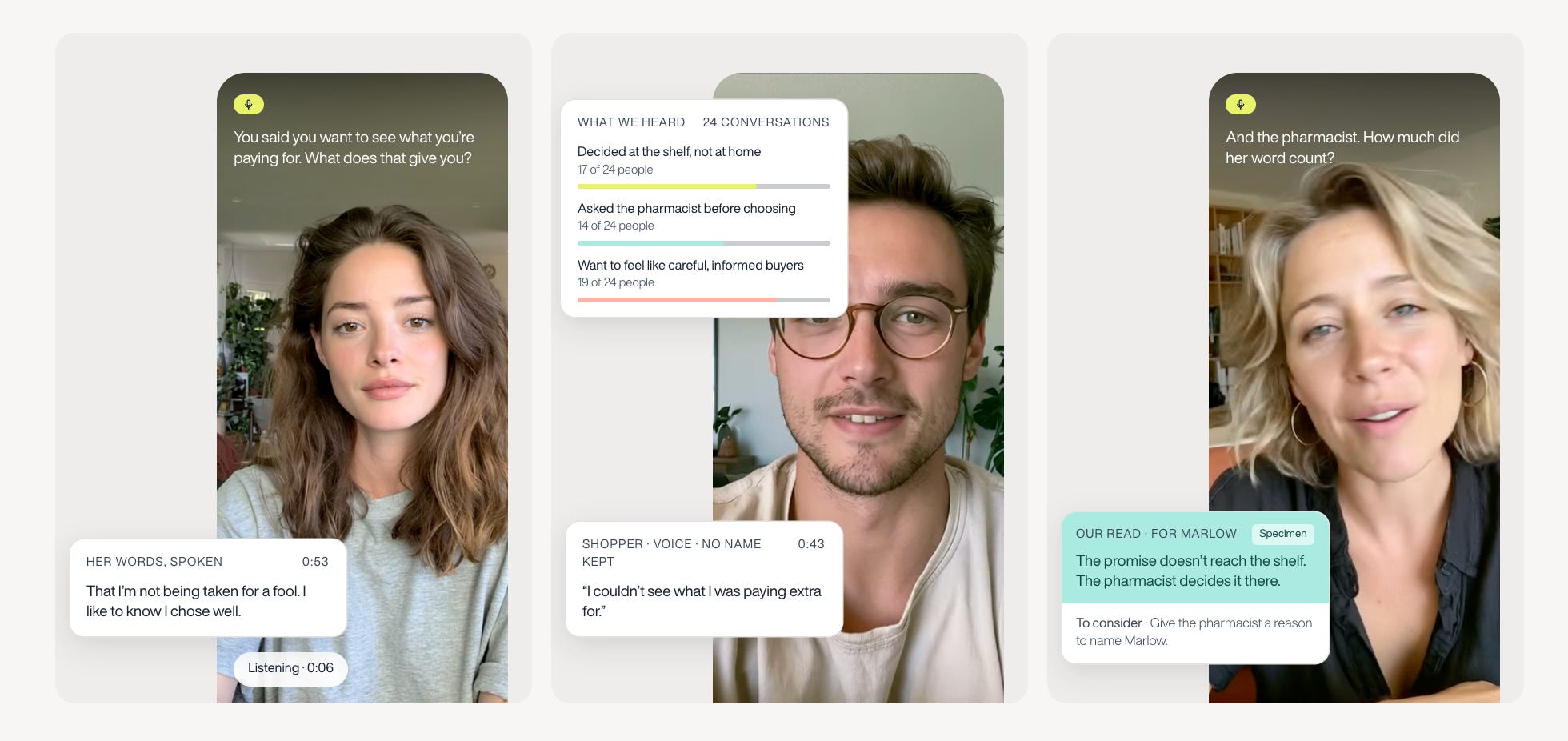
There’s someone missing from a lot of conversations between brand leaders, agencies and consultants.
You know who.
The customer.
Ideas get tossed around. Strategies take shape. Assumptions become conclusions. Personal preferences develop impressive strategic justifications.
Meanwhile, the person whose choice pays for all of this hasn’t said a word.
Then we build the positioning, the campaign, the packaging and occasionally the entire growth plan.
That’s an expensive way to find out we were wrong.
I know the pattern. I’ve been a strategist for twenty years, and I’ve participated in plenty of these conversations myself.
Quantitative research has its place. But I’ve also worked through enough 80-page decks to know that more charts don’t necessarily mean more understanding.
Some of the most useful insights I’ve found came from interviews and observation. Hearing someone explain their last purchase. Finding out what they considered, what bothered them, and what finally tipped the decision.
The interesting bit usually comes after the first answer.
But getting those conversations organised, conducted and interpreted takes time and money. Which is often why they never happen.
We built Talk™ by Original Minds to make them easier to bring into the work.
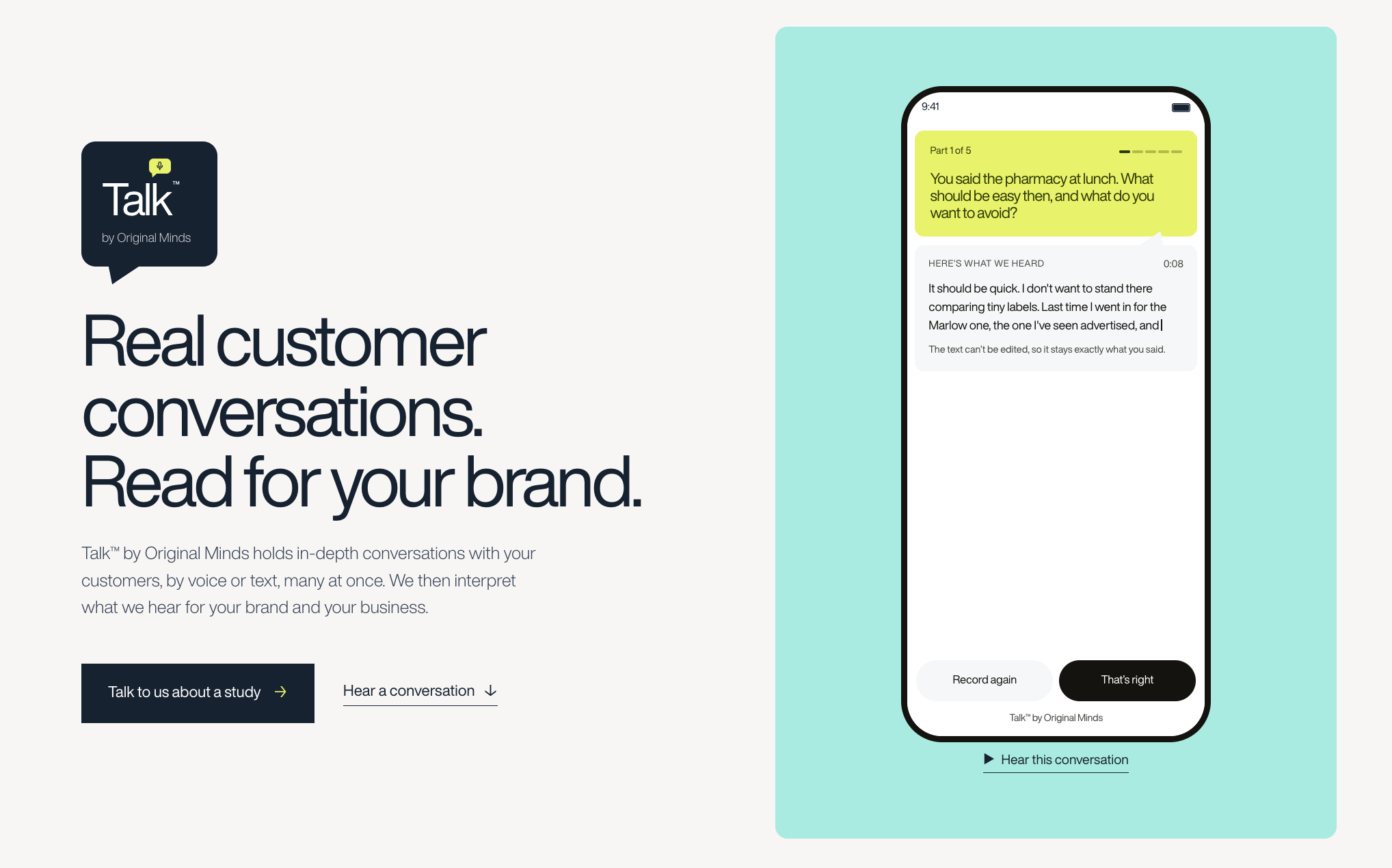
Talk holds individual conversations with real customers, by voice or text, with multiple interviews running at once. An AI interviewer asks the questions and follows up on their answers.
Then we do the interpretation: what we heard, what it means for the brand, and what to consider next.
AI interviewing already exists. Our focus is on connecting those conversations to the brand, its market and the decision someone actually needs to make. This is what the Original Minds Intelligence system is built for - continuous reading, interpretation, diagnosis, and recommendations.
You could use Talk to explore why customers choose a competitor. Understand what people make of a new product idea. Or find out whether the promise everyone loved in the meeting means anything outside the meeting.
For agencies, strategists and designers, it brings customer evidence into the brief while there’s still time to change it.
For brand and business leaders, it helps investigate a question before committing to a bigger decision.
You can start with one question. No need to commission a small library.
I’ll send you an invitation soon to try a short conversation yourself. Afterwards, I’ll share what we learn and how we interpret it.
Meanwhile, hit reply:
What’s one question about your customers—or a client’s customers—you wish you could answer properly?
Tobias